
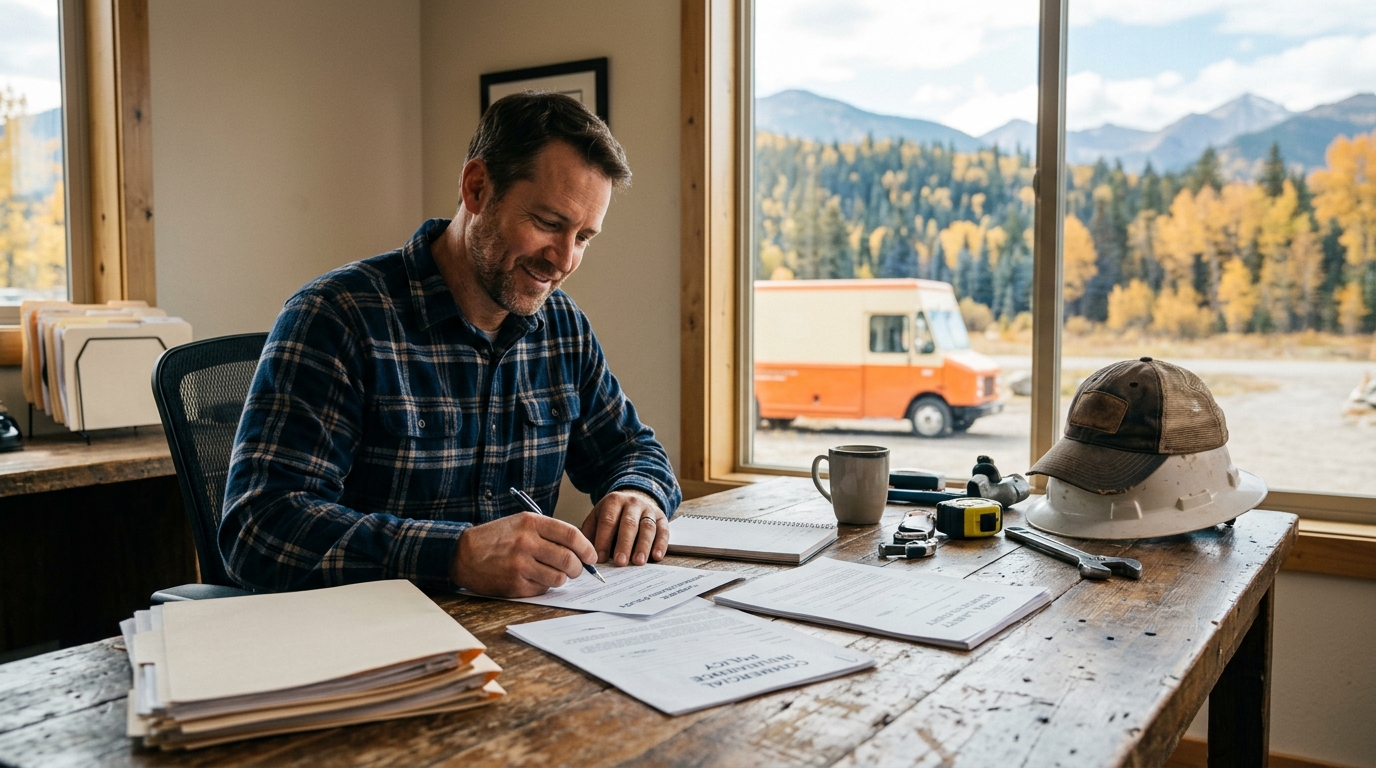
As fall turns into winter across Western Montana, a little insurance housekeeping can help your business avoid big surprises. Reviewing your property, vehicles, people, and downtime risks now gives you a chance to adjust coverage before snow loads, icy roads, power outages, and busy seasonal operations arrive. D.L. Williams Insurance Inc. is here for the practical questions—the kind our insurance nerds genuinely enjoy.
Whether you run a shop in Missoula, a restaurant in Hamilton, a contracting crew in the Bitterroot Valley, a nonprofit in Kalispell, or a logging operation farther out, your business changes over time. Your insurance should keep up.
Start With Your Commercial Property Limits
Commercial property coverage can help protect your building, tenant improvements, inventory, furniture, and other business property after covered losses such as fire, theft, wind, or certain water damage. The important question is whether the limit still reflects what it would cost to repair or replace what you have today—not what it cost years ago.
Construction costs, materials, labor, and equipment prices can move quickly. A contractor who expanded a shop, a restaurant that renovated its kitchen, or a nonprofit that updated its office technology may have more at risk than the policy currently reflects.
For a business owners policy in Western Montana, it is worth reviewing:
- Whether building limits reflect current rebuilding costs
- New improvements, additions, signage, or leased-space upgrades
- Inventory that rises during a busy season
- Whether contents limits account for furniture, fixtures, and supplies
- Deductibles your business could realistically handle after a loss
Snow and cold deserve a place in the conversation, too. Frozen pipes, roof issues, ice-related damage, and backup power needs can create expensive interruptions. The goal is not to expect the worst; it is to make sure a bad day does not become a business-ending one.
Do Not Let Tools and Equipment Become a Coverage Gap
Tools have a habit of multiplying. So do replacement costs. If your crew has added trailers, welders, generators, specialty saws, excavating attachments, laptops, or other gear, a quick look at your coverage for business equipment is smart.
This is especially important for contractors and mobile businesses. A standard property policy may have limitations for tools that travel from jobsite to jobsite, stay in a truck overnight, or are stored away from your main location. Insurance for contractors in Montana often needs to address the real-world movement of equipment, not just what sits inside a shop.
Logging operations may have a different mix of exposures: specialized machinery, chainsaws, skidder attachments, service trucks, and equipment used in remote locations. D.L. Williams Insurance can help business owners consider whether their tools, gear, and equipment schedules reflect their current operation. Because “we thought that was covered” is not a phrase anyone wants to say while standing in a snowy yard.
Give Commercial Vehicles a Winter-Ready Review
Winter driving in Missoula, Hamilton, Kalispell, and throughout Western Montana asks more of every vehicle on the road. For a business, it can also mean more delivery miles, changing routes, employees behind the wheel, towing, or equipment being hauled between jobs.
Commercial auto coverage should be reviewed when you add or replace vehicles, hire drivers, begin towing trailers, use personal vehicles for business errands, or increase your service area. A business auto policy in Missoula may need to account for vans, pickups, work trucks, food-service vehicles, trailers, or other commercial vehicles that keep your operation moving.
For contractors, make sure the truck and trailer setup matches how the crew actually works. For a hospitality business, think about guest shuttles, catering deliveries, or employees who run errands. For loggers, vehicle and hauling exposures can be substantial, particularly when trucks and equipment travel on rural roads or between sites.
Commercial auto insurance in Kalispell and other nearby communities is not just about the vehicle itself. It is also about liability, drivers, cargo or equipment considerations, and the financial impact when a vehicle is out of service.
Check Workers Compensation Before Work Ramps Up
Workers compensation is a core part of protecting your team and your business. Fall and winter can bring slippery conditions, heavier clothing, reduced daylight, changing schedules, and different job duties. Those factors can affect contractors, restaurants, nonprofit staff, and field-based logging crews in different ways.
If you have hired new employees, changed payroll, added a new class of work, or started using seasonal help, your policy information may need attention. Workers compensation insurance in Hamilton and across the Bitterroot Valley should reflect the actual roles your employees perform—not the roles they held when the policy was first written.
For example, a restaurant may have added delivery staff or expanded catering. A nonprofit may be hosting more events and using part-time workers. A contractor may have shifted from indoor finishing work to roofing, snow removal, or heavier outdoor work. Accurate classifications and payroll estimates help your coverage and audit process make more sense later.
Revisit General Liability and Contracts
General liability coverage is designed to help with certain third-party claims involving bodily injury, property damage, and personal or advertising injury. It is often foundational coverage for a small business, but the details matter.
A contractor may be asked to provide specific liability limits, additional insured status, or contractual wording before starting a project. A restaurant or hospitality business may need to think about customer slips and falls, food-related claims, private events, or alcohol-related exposures where applicable. A nonprofit may need liability protection for community programs, volunteers, fundraising events, or use of rented space.
When reviewing general liability insurance in Missoula, bring contracts, certificates of insurance requests, and lease requirements to the conversation. Our team at D.L. Williams Insurance Inc. can help you identify what a request means and whether your current policy is designed to meet it. No dramatic insurance jargon decoder ring required—although we do keep a few nerdy notes nearby.
Plan for a Business Interruption, Not Just Physical Damage
A covered property loss can create two problems: damage to the building or equipment, and lost income while the business recovers. Business interruption coverage, sometimes called business income coverage, can help with certain lost income and continuing expenses after a covered loss. It can be a crucial piece of small business insurance in Missoula and throughout the region.
Consider a restaurant that cannot operate after a kitchen fire, a contractor whose shop and equipment are damaged, or a nonprofit forced to relocate after a covered loss. The question is not only, “Can we replace what was damaged?” It is also, “How do we keep paying essential expenses while we get back on our feet?”
Hospitality businesses should consider the ripple effect of a shutdown during booked events or high-demand travel periods. Logging businesses may need to consider the cost of disrupted operations, equipment repairs, and contractual commitments. Your actual needs depend on your policy, operations, and the cause of loss, but the conversation is worth having before a disruption occurs.
Industry-Specific Questions Worth Asking
A coverage review is most useful when it starts with how your business really operates. Here are a few examples our insurance nerds may ask about:
- Contractors: Have you purchased equipment, added a trailer, hired subcontractors, taken on larger jobs, or started working in a new trade area?
- Restaurants and hospitality businesses: Have you remodeled, added catering or delivery, changed alcohol service, expanded outdoor seating, or booked more private events?
- Nonprofits: Have your programs, volunteers, fundraising events, grant requirements, or board activities changed?
- Logging operations: Have you added equipment, drivers, hauling activity, job locations, or employees with different responsibilities?
Those answers can affect business property protection, liability limits, commercial vehicles, workers compensation, and whether a commercial umbrella policy may be worth discussing.
Why a Local Review Can Make a Difference
Businesses in Western Montana deal with conditions and operations that do not always fit a generic online checklist. From winter road conditions and rural worksites to local events, changing tourism traffic, and mountain-weather surprises, details matter.
D.L. Williams Insurance Inc. is a Missoula insurance agency that works with businesses across Missoula, Hamilton, Kalispell, the Bitterroot Valley, and the broader Western Montana community. As an independent insurance agency, we can help you look at your coverage with fresh eyes and discuss options that fit your operation, budget, and tolerance for risk.
FAQ
When should I review my business insurance?
Review it at least once a year and whenever your business changes. Common triggers include buying equipment, adding vehicles, hiring employees, moving locations, renovating, changing services, signing a major contract, or increasing sales.
Does commercial property insurance cover equipment away from my business location?
It may provide limited coverage depending on the policy and the circumstances, but mobile tools and equipment often need closer attention. Contractors, logging businesses, and other mobile operations should ask specifically how gear is covered at jobsites, in vehicles, and in storage.
Do I need commercial auto coverage if employees use their own vehicles?
Possibly. Personal auto policies may not fully address business use, and your business can still face liability if an employee causes an accident while running a work-related errand. Ask about hired and non-owned auto liability coverage for your situation.
How does workers compensation apply to seasonal or part-time employees?
Coverage requirements and classifications can vary based on the work performed and your business structure. Keep payroll and job-duty information current, especially when you hire seasonal staff or shift employees into different types of work.
What is business interruption coverage?
Business interruption coverage may help replace certain lost income and pay continuing expenses when a covered property loss forces a temporary shutdown or slowdown. The available coverage depends on the policy terms, limits, waiting period, and cause of loss.
If you are looking at business insurance in the Bitterroot Valley, commercial insurance in Missoula, or coverage for a growing operation elsewhere in Western Montana, D.L. Williams Insurance Inc. would be glad to talk it through. Ask us a question or request a no-pressure coverage review—we are always happy to nerd out over the details.