
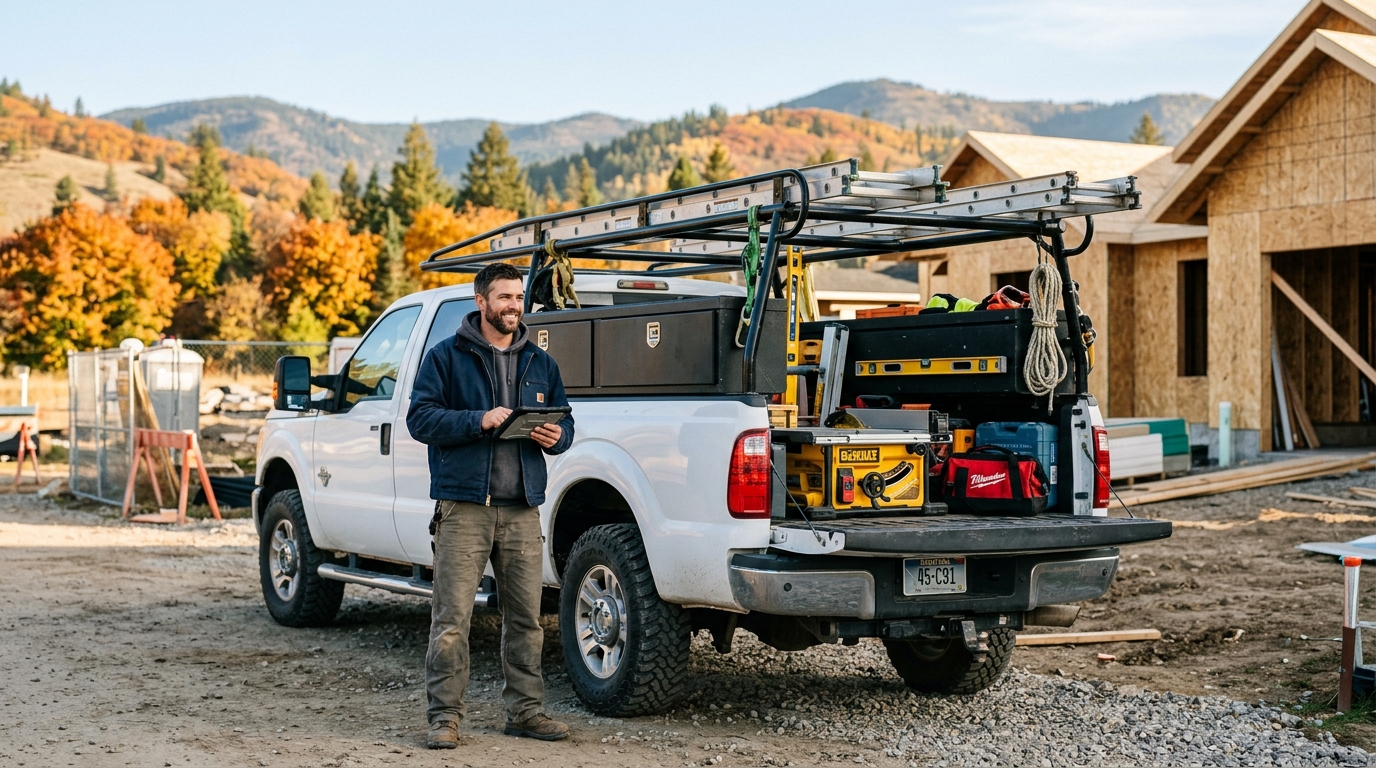
For contractors and tradespeople, work rarely stays in one place. Your crew, tools, vehicles, materials, and reputation move from shop to truck to jobsite every day. The right insurance for contractors in Montana is not one policy—it is a coordinated set of coverages designed to help protect the moving parts of your operation.
D.L. Williams Insurance Inc. helps contractors throughout Missoula, Hamilton, Kalispell, the Bitterroot Valley, and Western Montana look at the real-world risks behind the work. Our insurance nerds are here for the practical questions: What happens if tools are stolen from a truck? Does a leased work vehicle need special attention? What if damage occurs at a customer’s property? Let’s break it down.
Why Mobile Operations Need Layered Coverage
A contractor may begin the day at a shop, load up a trailer, drive to a customer location, and finish at a different jobsite. Each stop creates a different type of exposure. A single policy may address part of the picture, but it may not respond to every loss involving vehicles, tools, employees, property, or liability claims.
That is why a coverage review should start with how your business actually operates. Consider the vehicles you use, whether employees drive them, where tools are stored, whether equipment is owned or leased, the value of materials in transit, and the kinds of projects your team completes at customer locations.
D.L. Williams Insurance Inc. can help build business insurance in the Bitterroot Valley, Missoula, Kalispell, and surrounding communities around those day-to-day realities—not a generic checklist.
General Liability for Tradespeople at Customer Locations
General liability for tradespeople is often a foundational coverage because the work itself can create third-party injury or property-damage risks. If you are installing cabinetry, repairing plumbing, framing an addition, servicing HVAC equipment, or completing another trade project at a customer’s location, an accident can affect someone else’s property or cause an injury.
For example, a contractor working in a client’s home might accidentally damage finished flooring while moving equipment. Or a visitor could trip over a cord or material left in a work area. General liability may help address covered claims, subject to the policy’s terms, limits, exclusions, and conditions.
Many customers and general contractors also request proof of liability coverage before work begins. That does not mean every requirement is identical, so it is worth reviewing contract requirements before signing. D.L. Williams Insurance Inc. can help you understand how your general liability insurance fits the jobs you take on across Western Montana.
Commercial Auto for Trucks, Vans, Trailers, and Leased Vehicles
Your work truck is more than transportation—it is part of the business. A commercial vehicle policy in Montana may help protect vehicles used for business purposes, whether that means a pickup carrying tools, a cargo van making service calls, or a vehicle towing equipment to a jobsite.
Leased vehicles deserve a closer look. Lease agreements may set insurance requirements, and the business still needs to consider who drives the vehicle, how it is used, and whether equipment or materials travel inside it. A personal auto policy may not be built for the same business use, drivers, or liability needs.
For contractors needing commercial auto insurance in Kalispell, a business auto policy in Missoula, or broader Montana commercial vehicle coverage, the details matter. Vehicle ownership, leasing arrangements, hired or non-owned vehicles, trailers, driver lists, and routes can all affect the conversation. Our team can help review the moving pieces so your commercial auto coverage aligns with the way your crew gets to work.
Coverage for Tools and Gear Beyond the Shop
Tools are productive assets, but they are also tempting targets when left in a truck, trailer, or jobsite storage area. If tools are stolen from a truck overnight, the loss can interrupt work quickly—especially when specialized equipment is needed for the next scheduled job.
Business property coverage can be important, but its protection may be tied to a listed premises or have limitations for property away from that location. For mobile operations, inland marine coverage is commonly used to address eligible tools, equipment, and other property that travels with the business. Think of it as coverage for tools and gear that does not stay politely inside the shop.
For example, a contractor may have equipment damaged after a jobsite storage box is hit by a falling object, or tools may be stolen from a locked work vehicle. The available coverage can depend on how the property is scheduled or described, where it was located, the cause of loss, deductibles, limits, and policy terms. That is why keeping an up-to-date inventory—with photos, serial numbers, purchase records, and replacement values—is an insurance-nerd habit worth adopting.
When discussing coverage for business equipment, include hand tools, power tools, compressors, generators, ladders, diagnostic equipment, trailers, rented gear, and materials in transit. Not every item is handled the same way, and a little detail upfront can prevent an unpleasant surprise later.
Workers Compensation for the Crew Behind the Work
Trades work can be physically demanding, and even careful teams face hazards. Workers compensation coverage may help with eligible workplace injury or occupational illness claims, depending on Montana requirements and the policy. It can be especially important for businesses with employees who lift, climb, drive, operate equipment, or work around active jobsites.
For a contractor searching for workers compensation in Hamilton, the Bitterroot Valley, or elsewhere in Western Montana, payroll, job classifications, subcontractor relationships, and safety practices are important details. The work performed matters more than a simple job title. A carpenter, electrician, painter, excavation worker, and office administrator may present very different exposures.
Review whether your crew structure has changed. Adding employees, taking on larger projects, using subcontractors, or expanding into a new type of work can all be good reasons to revisit workers compensation coverage.
Business Property Protection for Your Home Base
Mobile does not mean your business has no home base. Your office, shop, warehouse, storage unit, or yard may contain inventory, supplies, computers, shelving, tools, and records that keep operations running. Business property protection can help address covered damage to those physical assets.
A business owners policy in Western Montana may package property and liability coverage for qualifying small businesses, but the fit depends on the operation. A contractor with a dedicated shop, a fleet, expensive mobile equipment, or unusual property exposures may need additional coverage beyond a standard package.
For example, a fire, theft, or covered weather-related event affecting a shop could disrupt both property and income. Ask about the premises you use, what you store there, and whether business income or extra-expense coverage may be relevant. D.L. Williams Insurance Inc. helps contractors look beyond the building itself to the equipment and operations that depend on it.
Umbrella Liability Adds Another Layer
Liability claims can grow beyond the limits of an underlying general liability or commercial auto policy. A commercial umbrella policy may provide an additional layer of liability protection over certain covered underlying policies, after their applicable limits are exhausted and subject to the umbrella’s own terms.
For a contractor, a serious vehicle accident, major property-damage allegation, or severe injury claim can create substantial financial pressure. An umbrella liability policy is not a substitute for solid underlying coverage, but it can be an important part of a larger risk-management plan.
The right amount is not the same for every business. The size of your projects, contract requirements, number of vehicles, payroll, customer locations, and assets can all shape the conversation. This is one area where the insurance nerds at D.L. Williams Insurance Inc. genuinely enjoy getting into the details.
Build Coverage Around How You Work
A practical mobile-business insurance plan often connects general liability, commercial auto, tools and equipment coverage, workers compensation, business property protection, and umbrella liability. Each coverage has a different job, and together they can help address the risks that follow contractors from one workday and jobsite to the next.
Before requesting a review, gather a current vehicle list, lease documents, driver information, payroll details, certificates requested by customers, equipment values, tool inventory, shop information, and any contracts that specify insurance requirements. The clearer the picture, the more useful the conversation can be.
If you are looking for insurance for contractors in Montana—from Missoula and Hamilton to Kalispell, the Bitterroot Valley, and throughout Western Montana—D.L. Williams Insurance Inc. is ready to talk through your operation in plain English. Every business is different, so review your specific needs, policy terms, limits, deductibles, and exclusions with an independent insurance professional before relying on any coverage.
FAQ
Does commercial auto cover tools stolen from my truck?
Not necessarily. Commercial auto coverage is generally designed for vehicle-related losses and liability exposures. Tools and equipment may require separate business property or inland marine coverage, depending on the policy and circumstances. Review how your tools are stored and transported before assuming they are covered.
What insurance helps if equipment is damaged at a jobsite?
Inland marine or contractors equipment coverage may help with eligible damage to mobile equipment at a jobsite, subject to the policy’s terms. The type of equipment, cause of damage, valuation method, deductible, and whether the equipment is owned, rented, or leased can all matter.
Do I need commercial coverage for a leased work vehicle?
A leased vehicle used in your business should be reviewed under a commercial vehicle policy. Lease contracts may require specific limits or coverages, and your policy should account for business use, drivers, vehicle type, and any equipment or trailers involved.
Is general liability enough for a contractor working in customers’ homes?
General liability is an important starting point for many contractors, but it does not replace commercial auto, workers compensation, property, tools-and-equipment, or umbrella coverage. A complete plan depends on the work you perform, your crew, your vehicles, your property, and your contract obligations.
How often should contractors review their insurance?
Review your coverage at least annually and whenever your business changes. New vehicles, additional employees, larger projects, new equipment, a leased truck, a shop move, or expanded services are all reasons to contact D.L. Williams Insurance Inc. for a fresh look.