
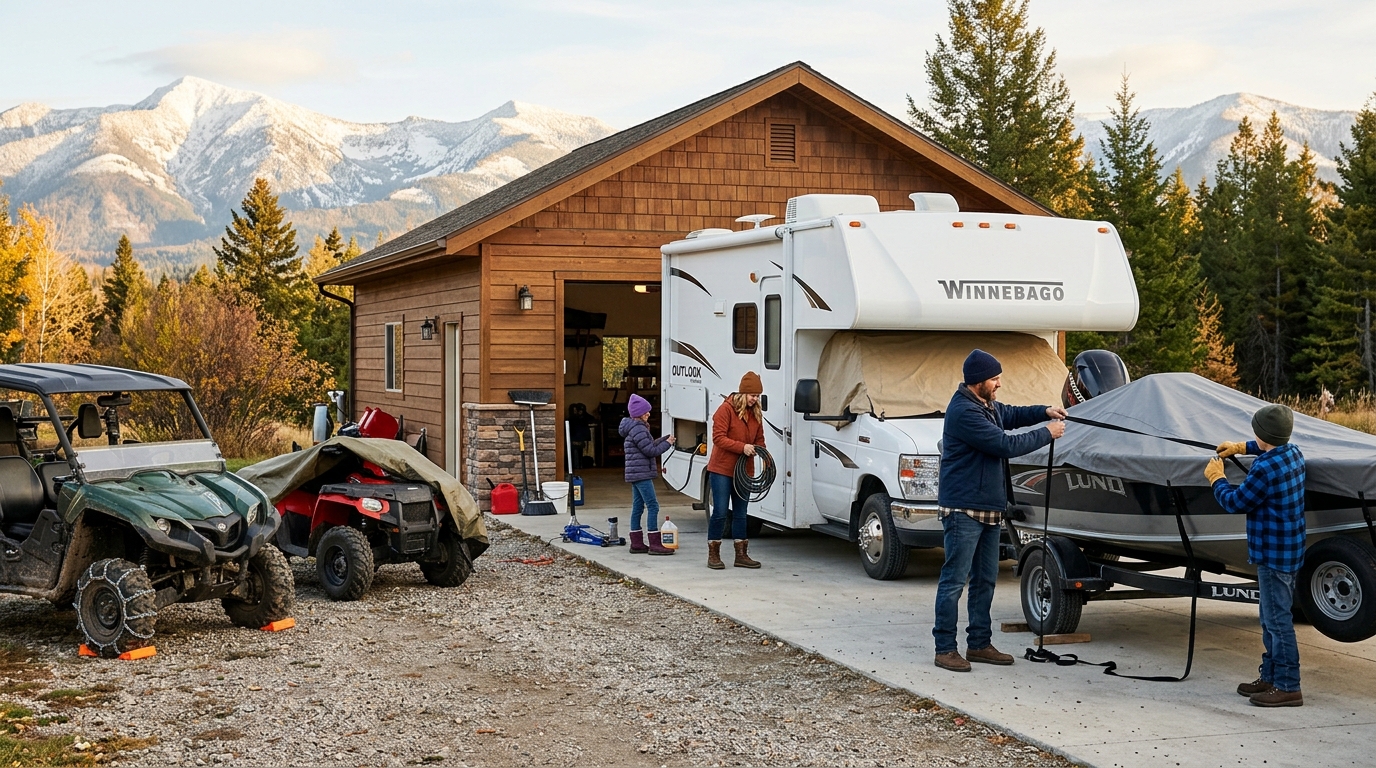
When the temperatures drop across Western Montana, it is time to put away the RV, boat, ATV, side-by-side, and other favorite seasonal toys. Winter storage can reduce road and water time, but it does not eliminate the risks. Theft, fire, falling branches, heavy snow, wind, and an unexpected storage-site mishap can still cause expensive damage. Before you tuck everything away, a quick coverage review can help your family avoid a frustrating surprise when spring arrives.
At D.L. Williams Insurance Inc., we help families and outdoor enthusiasts in Missoula, Hamilton, Kalispell, and throughout the Flathead Valley look at the real-world details of seasonal storage. We are insurance nerds, after all, so we think a little planning now is a lot more enjoyable than decoding a policy after a loss.
Storage Does Not Mean Risk-Free
It is easy to assume a parked RV or covered boat no longer needs much insurance. In reality, stored equipment can be vulnerable in ways that are different from summer use. A fire in a storage building, a break-in at an unsecured lot, hail, wind, rodents, or a roof collapse from snow load can all create a costly claim.
For many owners, the coverage conversation shifts from on-the-road or on-the-water liability to protection against physical damage. Comprehensive coverage may help with certain non-collision losses, such as theft, fire, vandalism, or weather damage, subject to the policy terms, deductibles, and exclusions. The specific protection available depends on the vehicle or watercraft, the policy, and how it is stored.
That is why seasonal insurance for RVs and boats deserves more than a quick assumption. A brief review can clarify what remains protected during the off-season and what could change if you adjust coverage.
Choose the Storage Location Carefully
Where you store a seasonal vehicle matters. A locked private garage, a covered RV storage facility, an open lot, a driveway, and a friend’s barn all present different risks. Consider how secure the location is, whether it has cameras or controlled access, how well it is maintained, and whether trees, roofs, flood-prone areas, or nearby buildings could create hazards.
If you are parking an RV at home in Hamilton, placing a boat in a Flathead Valley storage facility, or storing ATVs at a cabin outside Missoula, document the condition before storage. Take photos, secure keys, remove valuables, and use appropriate locks or anti-theft devices. These practical steps can reduce risk and make the claims process easier if something does happen.
Boat storage insurance in Montana and RV storage coverage in Montana are not one-size-fits-all topics. The location, construction of the storage site, vehicle value, deductible, and policy language all matter.
Winter Weather Can Be Tough on Toys
Montana winters bring more than a pretty view. Heavy snow, freeze-thaw cycles, wind, ice, and falling limbs can damage roofs, covers, trailers, and stored equipment. Water left in a boat, RV plumbing system, or certain engines can freeze and cause serious problems. A damaged cover may allow snowmelt or moisture inside, creating mold, interior damage, or electrical issues.
Winterizing is important, but it is not a substitute for insurance. Follow the manufacturer’s storage recommendations, inspect covers and seals, disconnect or maintain batteries as appropriate, and check on the property periodically when possible. Keep receipts for professional winterization, storage fees, upgrades, and major repairs. Good records support both maintenance and ownership documentation.
D.L. Williams Insurance Inc. can help you understand how your personal insurance in Western Montana fits alongside coverage for the RV, boat, or recreational vehicle itself. Your homeowners policy may offer some limited protection for personal belongings, but it is not automatically a replacement for a dedicated toy policy.
Theft and Fire Still Matter in the Off-Season
Stored toys can attract attention, especially when they are parked in open areas or lightly secured buildings. Trailers, electronics, tools, fishing gear, portable fuel containers, and accessories may be targets for theft. Fire risks can also increase when equipment is stored near heaters, electrical systems, fuel, propane, batteries, or other combustible materials.
Before storage, remove valuable portable gear when practical. Confirm that fuel and propane are handled according to manufacturer and facility requirements, and avoid overloading electrical connections. If you use a commercial storage site, ask what security and fire protections are in place. Their property insurance does not necessarily cover your RV, boat, ATV, or side-by-side.
For people searching for toy insurance in Missoula, the useful question is not simply, “Do I have coverage?” It is, “What losses are covered while this is stored, and what limits or deductibles apply?” That is a much better insurance-nerd question.
Liability Can Follow the Toy, Even in Storage
Liability coverage is often associated with driving, towing, or operating a boat. But storage can still create liability concerns. Someone could be injured around the vehicle, a trailer could roll, a battery issue could lead to damage, or an unsecured ATV could become accessible to a child or guest. If your seasonal vehicle is financed or leased, the lender may also require certain insurance protections to stay in place year-round.
RV liability coverage, boat coverage in Missoula, and ATV insurance in Montana should be reviewed with the way you actually use and store each item in mind. The same goes for insurance for side-by-sides, snowmobiles, and trailers. An agent can help identify whether liability, comprehensive, collision, uninsured motorist coverage, accessories coverage, roadside assistance, or other options are relevant to your situation.
Loans and Leases May Limit Your Options
If you have a loan or lease, do not assume you can remove coverage just because the toy is parked for the winter. Most lenders require physical damage coverage until the loan is paid off. Canceling or reducing coverage without checking the agreement can put you in default, trigger lender-placed insurance, or leave you responsible for damage to an asset that still has a substantial balance.
Even if no lender is involved, consider the financial impact of a total loss. Would you be comfortable replacing the RV, boat, ATV, or side-by-side out of pocket after a fire or theft? If the answer is no, maintaining appropriate off-season protection may be the more practical choice.
Why Canceling Coverage Can Create Gaps
Canceling a policy may feel like an easy way to trim costs during winter, but it can create unexpected gaps. You may lose protection for theft, fire, weather, vandalism, and certain storage-related losses. You may also have to reapply for coverage later, potentially with different terms or pricing. In some cases, a lapse can complicate proof-of-insurance requirements or violate a lender’s conditions.
A better first step is a conversation. Depending on your policy and carrier, there may be options to adjust coverage for the storage season while maintaining important protections. The goal is not to keep coverage you do not need; it is to make sure a cost-saving change does not create a much larger financial problem.
FAQ
Can I cancel my RV insurance while it is stored for winter?
You can request changes, but canceling without reviewing the consequences can leave you without protection for theft, fire, weather damage, or vandalism. If the RV is financed or leased, your lender may require physical damage coverage to remain in force. Talk with an agent before making changes.
Does boat insurance cover my boat in storage?
Many boat policies can include protection for certain losses while the boat is stored, such as theft, fire, vandalism, or covered weather damage. Coverage varies by policy, storage location, deductible, and exclusions, so review the details before relying on it.
Do I need insurance for an ATV or side-by-side in the winter?
Even when it is not being ridden, an ATV or side-by-side can be stolen, damaged by fire or weather, or create a liability issue. Coverage for ATVs in Montana should reflect where it is stored, whether it is financed, and how you plan to use it once the season changes.
Will my homeowners insurance cover my stored recreational equipment?
Your homeowners policy may provide limited protection in some situations, but it often has exclusions, limits, or different rules for motorized recreational vehicles and watercraft. A dedicated policy may provide more appropriate protection for an RV, boat, ATV, or side-by-side.
What should I ask during a seasonal coverage review?
Ask what is covered while the item is stored, whether theft, fire, weather, and vandalism are included, how liability applies, what your deductible is, whether accessories are covered, and whether a lender or lease requires specific limits. Also ask whether bundling home, auto, and seasonal toys could create a discount.
Before the first hard freeze, let D.L. Williams Insurance Inc. help you review your seasonal toys and storage plans. Our local Missoula insurance experts serve families across Missoula, Hamilton, Kalispell, the Flathead Valley, and Western Montana, and we would be glad to talk through the coverage that makes sense for your next off-season.