
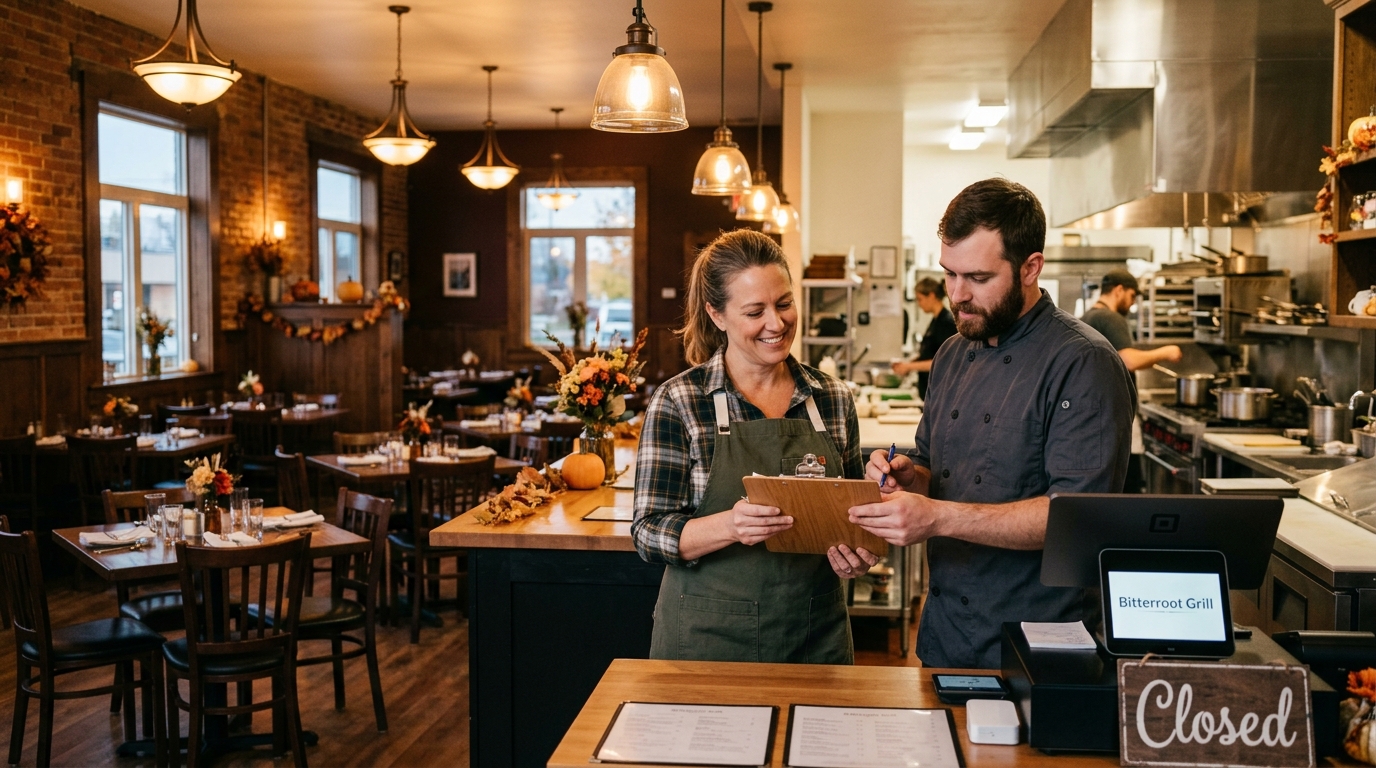
The busy holiday season can mean fuller dining rooms, more catered events, extended hours, and a faster pace for hospitality businesses. Before things pick up, it is worth taking a few minutes to make sure your coverage still fits the way you operate today. For restaurants, bars, cafés, breweries, food trucks, and other hospitality businesses across Missoula and Western Montana, a thoughtful policy review can help keep everyday surprises from becoming major interruptions.
At D.L. Williams Insurance Inc., we are the insurance nerds who enjoy turning policy language into plain English. Here are the key areas we recommend reviewing before the holiday rush.
Start With General Liability Coverage
General liability is a core part of restaurant insurance in Montana. It can respond when a customer alleges bodily injury or property damage connected to your operations. Think of a guest slipping near an entryway, a server accidentally spilling a hot drink, or an off-site catering setup damaging a client’s property.
The details matter. Review whether your policy reflects your current seating capacity, services, locations, patios, private events, catering work, and any changes in operations. A café that began offering private parties or a brewery hosting live music may have different exposures than it did when the policy was first written. Local insurance for restaurants should reflect the real day-to-day business, not last year’s version of it.
Check Your Property and Business Equipment Limits
Commercial property coverage helps protect the physical items that keep your doors open: furniture, fixtures, kitchen equipment, point-of-sale systems, décor, signage, and inventory. Whether you own your building or lease your space, it is important to understand what your policy covers and what remains your responsibility under the lease.
Equipment values can change quickly. New ovens, walk-in coolers, espresso machines, taps, ventilation systems, and upgraded technology all deserve a place in the conversation. Coverage for business equipment should be based on realistic replacement costs, not just the price paid years ago. D.L. Williams Insurance Inc. can help hospitality owners in Western Montana review these values in practical terms.
Do Not Overlook Equipment Breakdown
Property coverage and equipment breakdown coverage are related, but they do different jobs. Equipment breakdown coverage may help with certain sudden mechanical or electrical failures involving equipment such as refrigeration units, boilers, HVAC systems, electrical panels, and cooking equipment.
For a restaurant or bar, a refrigeration problem can affect far more than one appliance. It can disrupt prep, service, staffing, and inventory. Reviewing this coverage before a busy stretch gives you a chance to ask exactly which systems are included, whether spoilage is addressed, and what deductibles apply. It is one of those behind-the-scenes details our insurance nerds are happy to walk through.
Review Food Spoilage and Inventory Protection
Food, beverages, supplies, and specialty inventory are essential to hospitality operations. A power outage, refrigeration failure, or covered loss can put perishable stock at risk. Depending on the policy and endorsements selected, food spoilage coverage may help with covered loss to perishable items.
Take inventory before the season gets underway. Consider higher holiday liquor and wine purchases, specialty ingredients, pre-ordered catering supplies, and packaged goods for retail sale. If your inventory has grown, the policy limits should grow with it. This is especially important for businesses that source local ingredients or carry higher-value products for seasonal menus and events.
Make Sure Business Interruption Coverage Matches Reality
If a covered property loss temporarily forces you to close or reduce operations, business interruption coverage may help replace lost income and support certain continuing expenses. It is designed to help a business recover during a covered interruption, but the amount and period of restoration matter.
Ask whether the selected limit reflects your busiest periods, not just an average month. Holiday events, catering commitments, and increased foot traffic can make a temporary shutdown more expensive than expected. For some businesses, extra expense coverage is also worth discussing because it may help with certain additional costs needed to continue operating after a covered loss.
A business owners policy in Western Montana can package several foundational protections, but it should still be tailored to the way your business earns revenue. A quick review now can help ensure the policy keeps pace with your growth.
Keep Workers Compensation Up to Date
More holiday business often means more people on the schedule. Seasonal hires, added kitchen staff, delivery drivers, bartenders, and event crews can all change your payroll and job classifications. Workers compensation coverage helps address workplace injuries and is a vital part of protecting both your team and your operation.
Confirm that payroll estimates are current and that employees are classified accurately based on what they actually do. A staff member who regularly helps with deliveries, works event setups, or moves between front- and back-of-house duties may need to be discussed. If you are looking for workers compensation coverage from Missoula to Hamilton and across the Bitterroot, D.L. Williams Insurance Inc. can help make the process less mysterious.
Consider Commercial Auto for Deliveries and Mobile Operations
If your business owns or leases vehicles for deliveries, catering, supply runs, or food-truck operations, commercial auto coverage deserves a close look. Personal auto policies may not be designed for regular business use, especially when vehicles transport food, equipment, employees, or customers.
Food trucks and mobile vendors should also review coverage for the vehicle itself, attached equipment, and operations at events. A commercial vehicle policy in Montana should match how, where, and how often the vehicle is used. That applies whether you operate around Missoula, serve events near Kalispell, or travel throughout Western Montana.
Know When Liquor Liability Applies
Restaurants, bars, breweries, and event venues that sell, serve, or furnish alcohol should ask about liquor liability. General liability does not automatically provide the same protection for alcohol-related claims. The right approach depends on your specific operations, licensing, contracts, staffing, and alcohol service practices.
Liquor liability is not about assuming the worst. It is about understanding the responsibilities that come with serving guests and making sure your restaurant liability coverage aligns with your operation. If you host tastings, private events, taproom gatherings, or catered functions, bring those details to your policy review.
Look at Contracts, Events, and Higher Liability Limits
The holiday calendar may bring vendor agreements, venue contracts, catering commitments, and special events. These documents can include insurance requirements, additional-insured language, or minimum liability limits. Review them before signing so there is time to address any coverage needs.
For some growing businesses, an umbrella policy for businesses can provide an additional layer of liability protection above qualifying underlying policies. It is not necessary for every operation, but it is a worthwhile conversation when your customer volume, events, vehicles, or contractual commitments increase.
FAQ
What insurance does a restaurant in Montana typically need?
Most restaurants need a combination of general liability, commercial property, workers compensation, and business interruption coverage. Depending on operations, they may also need equipment breakdown, food spoilage, liquor liability, commercial auto, and umbrella coverage. The right mix depends on the business’s location, services, property, staff, and contracts.
Does general liability cover liquor-related claims?
Not necessarily. Businesses that sell or serve alcohol should discuss liquor liability specifically. It is designed for alcohol-related exposures that may not be covered by a standard general liability policy.
Why should a food truck have commercial auto coverage?
A food truck is both a vehicle and a mobile business operation. Commercial auto coverage can address vehicle-related exposures, while separate business property and equipment coverage may be needed for the tools, inventory, and systems used to serve customers.
Can insurance help when food spoils after equipment fails?
Coverage may be available depending on the cause of loss and the endorsements included in the policy. Food spoilage and equipment breakdown are important topics to review for businesses that rely on refrigeration, freezers, and other temperature-sensitive equipment.
How often should a hospitality business review its policy?
At least once a year is a smart baseline, with an additional review after significant changes such as a remodel, new equipment purchase, added alcohol service, expanded catering, a new vehicle, or a meaningful change in payroll or revenue.
Insurance for the hospitality industry should feel like a useful business tool, not a stack of confusing paperwork. If you operate a restaurant, bar, café, brewery, food truck, or hospitality business in Missoula or elsewhere in Western Montana, D.L. Williams Insurance Inc. would be glad to have a real conversation about your current policy. We will bring the insurance-nerd details, listen to how your business works, and help you understand the coverage options that fit your next busy season.